Clara Walter · 8 September 2026
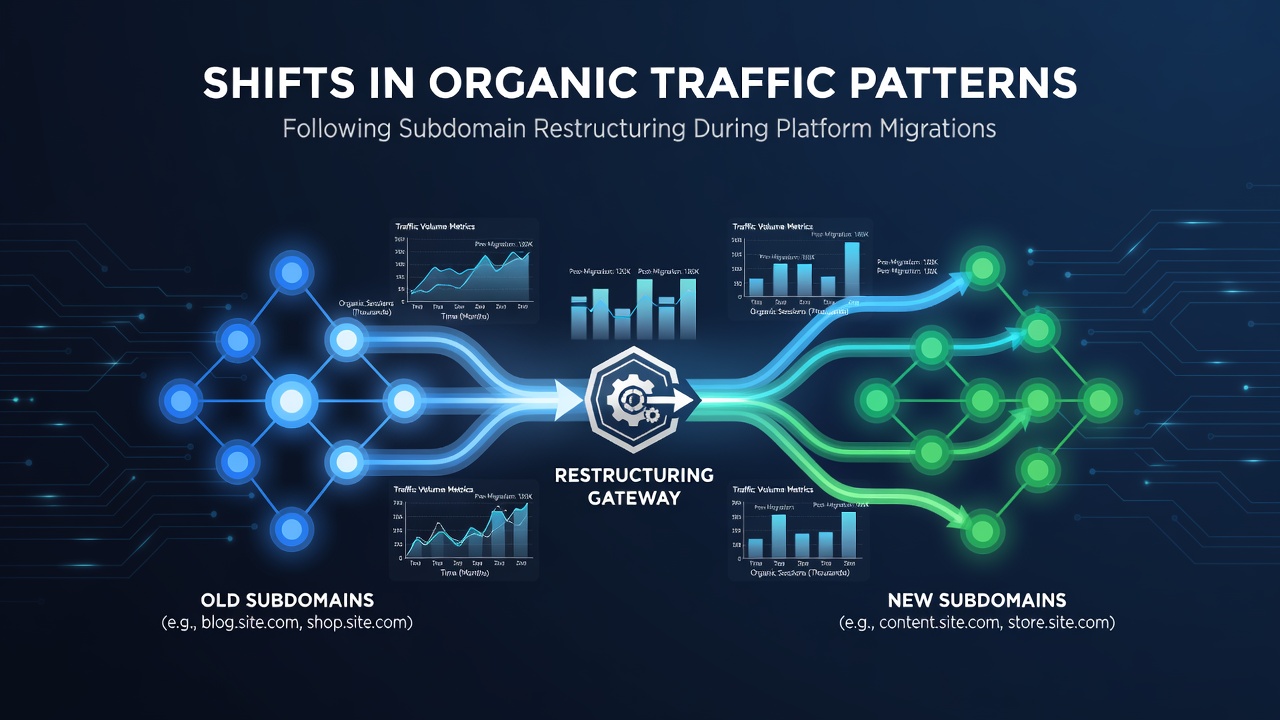
Shifts in organic traffic patterns following subdomain restructuring during platform migrations
Platform migrations often involve subdomain restructuring that redirects content from root domains to subdomains or consolidates multiple subdomains under a single primary domain, and these changes directly influence how search engines crawl, index, and rank pages. Research from academic institutions shows that such restructuring alters crawl budgets, internal link equity distribution, and URL authority signals, which in turn produce measurable shifts in organic traffic patterns across multiple reporting periods.
Core mechanisms driving traffic changes
Subdomain restructuring during migrations separates or merges content silos, yet search engines treat subdomains as distinct entities unless explicit signals like canonical tags and sitemap updates indicate otherwise. Data from industry reports reveal that when platforms move sections such as blog content or product catalogs to dedicated subdomains, those pages frequently experience temporary de-indexation while crawlers re-evaluate the new structure, and recovery timelines vary from weeks to several months depending on the volume of redirects implemented.
Those who have tracked large-scale migrations note that 301 redirects preserve some link equity, but incomplete redirect chains or missing canonical directives cause duplicate content flags that dilute ranking signals across the new subdomain architecture. Observers note that platforms migrating e-commerce catalogs to shop.example.com while keeping support resources on help.example.com often see divergent traffic trajectories, with the support subdomain retaining steadier impressions because its content receives fewer structural alterations.
Observed patterns in traffic distribution
Traffic data collected before and after restructuring shows that root domain authority sometimes concentrates on the primary domain while subdomains compete for the same keywords, leading to internal cannibalization that reduces overall click-through rates. Studies conducted by research teams at European universities indicate that when content moves from example.com/blog to blog.example.com, organic sessions for long-tail queries drop initially because historical backlink profiles require time to transfer authority through updated sitemaps and internal navigation updates.
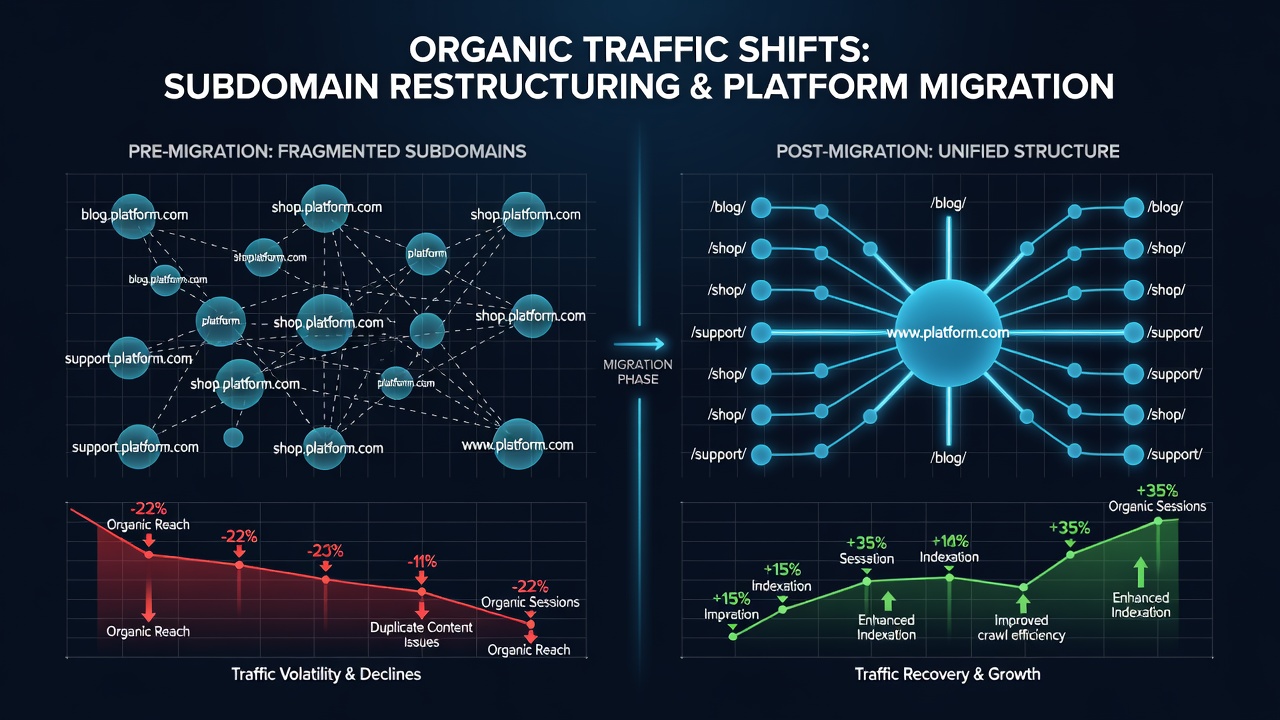
Yet platforms that maintain consistent breadcrumb navigation and hreflang tags across subdomains report faster stabilization of traffic volumes, particularly for international sites where regional search engines apply stricter indexing rules. Figures from Canadian digital economy analyses highlight that migrations completed in the first half of 2025 produced average traffic dips of 18 to 34 percent in the first 60 days, followed by partial recovery once Google Search Console data reflected the new URL properties.
September 2026 observations and ongoing trends
As of September 2026, platforms completing subdomain consolidations continue to report that mobile-first indexing amplifies the effects of restructuring because Googlebot allocates separate crawl resources to each subdomain. Researchers tracking these events find that sites using structured data markup on subdomains achieve quicker re-indexation, whereas those relying solely on XML sitemaps encounter delays when sitemap submission volumes exceed daily limits set by search engine APIs.
One documented case involved a media platform that shifted video archives to media.example.com and observed a 27 percent increase in impressions for branded queries within four months, while non-branded informational queries required nine months to regain pre-migration levels. External data from the European Commission's digital single market reports confirm that similar patterns appear across multiple sectors when subdomain authority signals are not reinforced through consistent anchor text and updated internal linking structures.
Measurement and recovery considerations
Analytics teams monitor shifts using segmented reporting in tools that separate root domain and subdomain performance, allowing precise identification of pages that lost ranking due to crawl budget redistribution rather than content quality changes. Industry organizations such as the Interactive Advertising Bureau have published guidelines recommending pre-migration audits of log files to establish baseline crawl frequency, which helps predict post-migration traffic trajectories with greater accuracy.
Those managing migrations also track changes in referring domain diversity because subdomain moves sometimes alter how external sites link to content, and this factor influences the rate at which new authority accumulates. Platforms that publish updated hreflang annotations and maintain identical content parity between old and new URLs demonstrate faster traffic stabilization according to aggregated datasets from multiple migration projects completed between 2024 and 2026.
Conclusion
Subdomain restructuring during platform migrations produces predictable yet variable shifts in organic traffic that stem from altered crawl behavior, redirect implementation quality, and authority signal propagation. Data collected across numerous cases demonstrate that careful planning around canonical tags, sitemaps, and internal navigation reduces the duration and severity of traffic fluctuations, while ongoing monitoring through segmented analytics supports timely adjustments that restore visibility.